
Why do we like cute things?
Gitanjali answers the question of why we like cute things in regards to the popularity of collecting trinkets.

Cuteness makes us more compassionate, according to Morten L. Kringelbach and his research with colleagues, Marc Bonstein and Catherine Alexander. Finding something cute requires the use of all our senses. Our attention is grabbed through the sparking of rapid brain activity. We feel a sense of affection, due to our nurturing instinct, towards animals or babies, or inanimate objects with infant-like features.
Konrad Lorenz introduced the ‘baby schema’, a theory that explains how certain physical features associated with babies prompt us to feel the desire to take care of someone. In recent years, it has been found that beyond just a nurturing instinct, it is a general positive feeling that influences how we socially interact with people.
The trinket trend seems to have stemmed from the popularity of bag accessorization last Summer. Moreover, it began with luxury-branded bags being ornately decorated with charms, bows, and keychains to emulate Jane Birkin’s Birkin bag. Coach bags come to mind as well with its cherry bag charm going viral on TikTok.
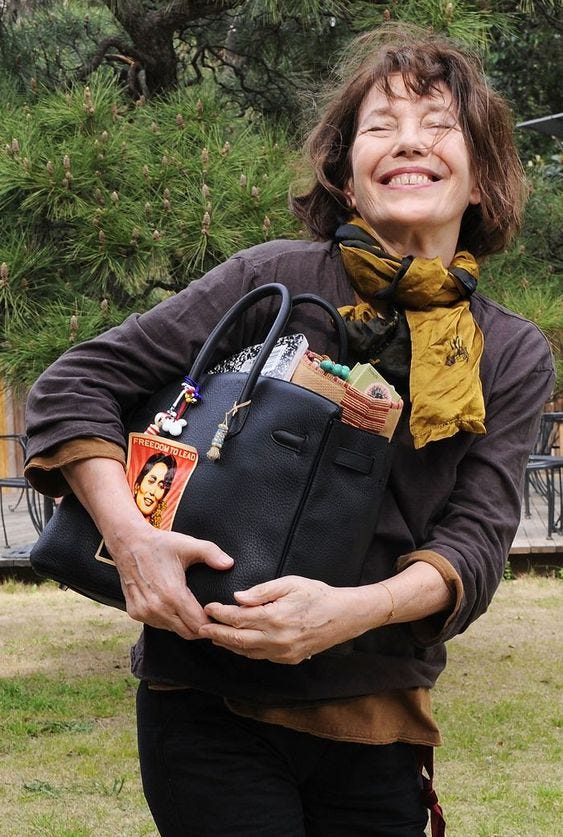
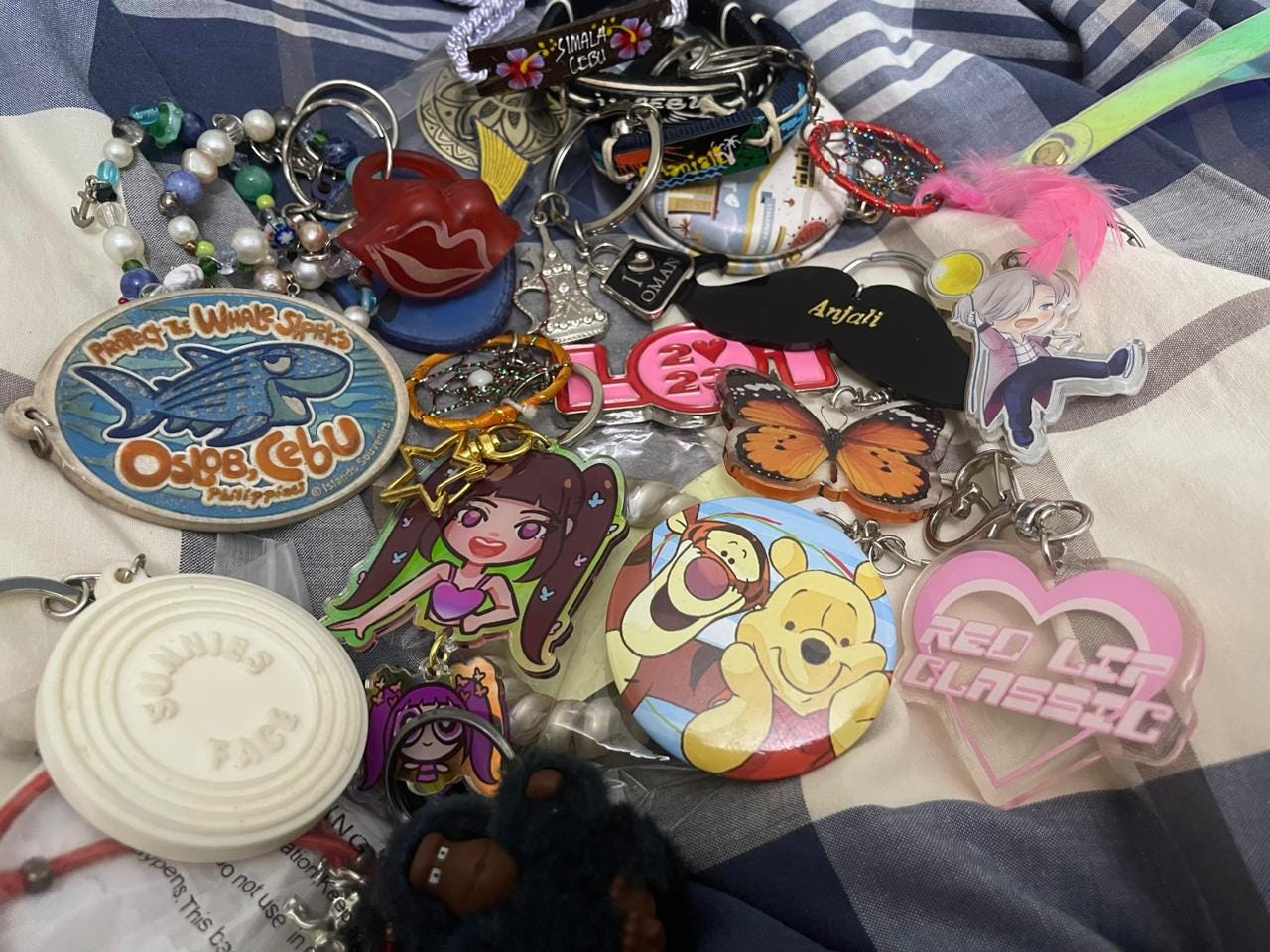
In the Philippines, there is a community of people who collect trinkets, colloquially known as anik-anik. Some examples include keychains, little stuffed animals, or a more popular obsession, a Sonny Angel. In an interview with Wonder Magazine, Bao, an illustrator and designer, explains that their collection is a way of self-expression. Further, curation should be personal to you in order to make the experience unique and individualized. Similarly, Arden (another interviewee) shares that they collect original artwork from other artists and friends in the form of stickers, prints, and keyrings. They define this as an archival process that is “fueled by sentiment and community.”
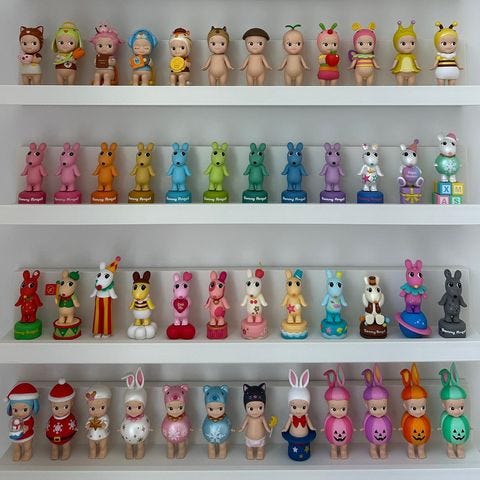
The aforementioned Sonny Angel grew in popularity in 2023.
A Sonny Angel is described as “a little angel boy who likes wearing all sorts of headgear. He is always by your side to make you smile. Sonny Angel will provide healing moments in your everyday life. He is a welcome sight at the entrance to your home, next to your bed, on your desk and so many other places.”
In an article by Shane O’Neill for The New York Times, he found that the appeal is three-fold, “one part collecting fad, one part dopamine hit and one part subcultural signifier.” The doll was created by Toru Soeya, who designed this to be a “tiny companion for working women in their mid-20s dealing with the stresses of adulthood.” The name ‘Sonny’ is a reference to the designer’s nickname. The first figure was released nearly a decade ago, on 15 May 2004. It uses a blind box packaging, meaning that you will not know what figure you will receive until you have bought one. There are various series available, each having 12 possible figure options. There are currently over 650 kinds of Sonny Angel figures. Some series contain a secret Sonny and a rare collectible Robby, described as “Sonny’s best friend.”
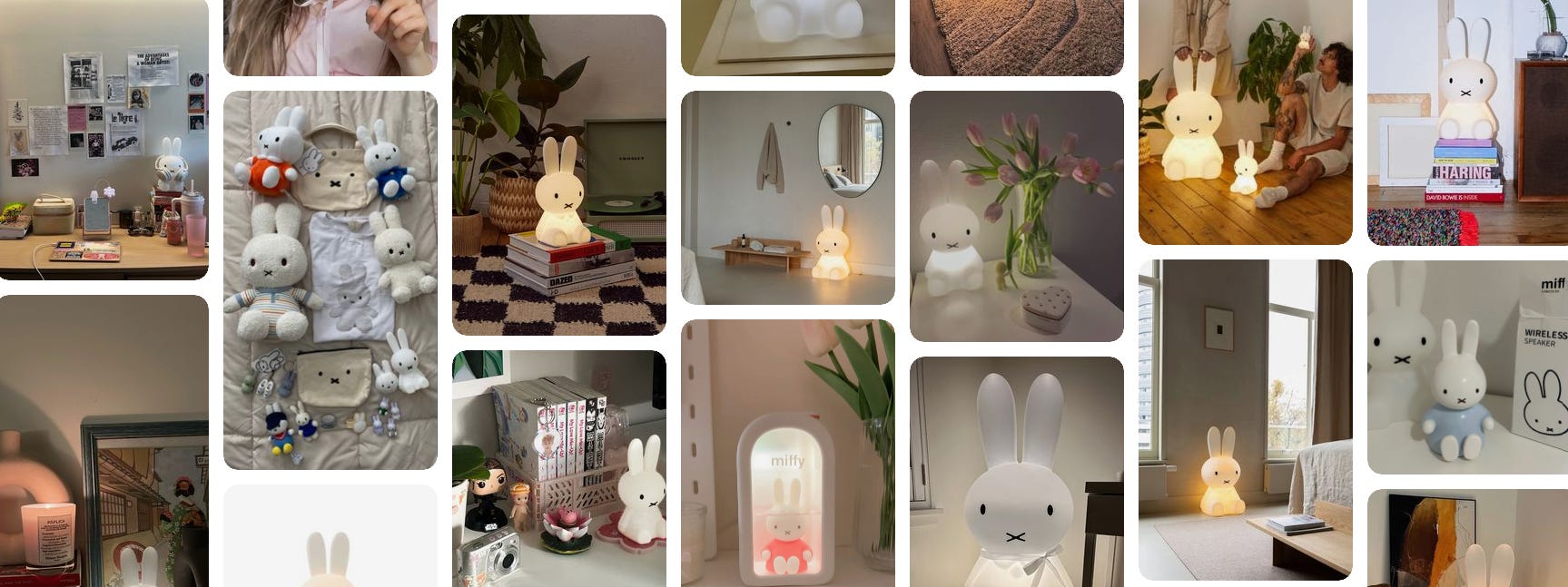
On the same note, Miffy and Snoopy have been gaining virality and taking over the Internet with merchandise of both characters contributing to the trinket trend. The former was created in 1955 by Dick Bruna. Miffy is a cartoon bunny that can be found in picture books and is popular in European and Asian countries. However, the character started becoming a part of the collectible culture in the United States from keyrings to giant floor lamps. This is due to the company’s marketing strategy of promoting Miffy as a character with “versatile, classic design.” In 2023, Mulberry and Tommy Hilfiger created limited edition collections in partnership with Miffy. Fiona Harkin from the trend forecasting company, Future Laboratory, explains that this phenomenon could lead to Japan’s kawaii culture becoming more embraced in the West due to her simplicity and comforting nature.
Snoopy is, in comparison, a more well-known character in the West. First appearing in 1950, the cartoon beagle was created by Charles M. Schulz as a part of the PEANUTS gang of characters. Other characters featured in the comic strips include Charlie Brown, Woodstock, Linus, Lucy, Schroeder, Sally, Franklin, Peppermint Patty, Marcie, and Pigpen. Elise Hannum finds that Snoopy’s existential musings are relatable to today’s audiences. Schulz used his comics to pose questions related to events such as the Vietnam War and atomic bomb fears. Further, the sense of nostalgia is brought up in memes, clips, and stills of Snoopy. TikToker Claudia Segovia tells Nylon Magazine that the Snoopy resurgence has brought her sentimental comfort and reconnection with her loved ones.
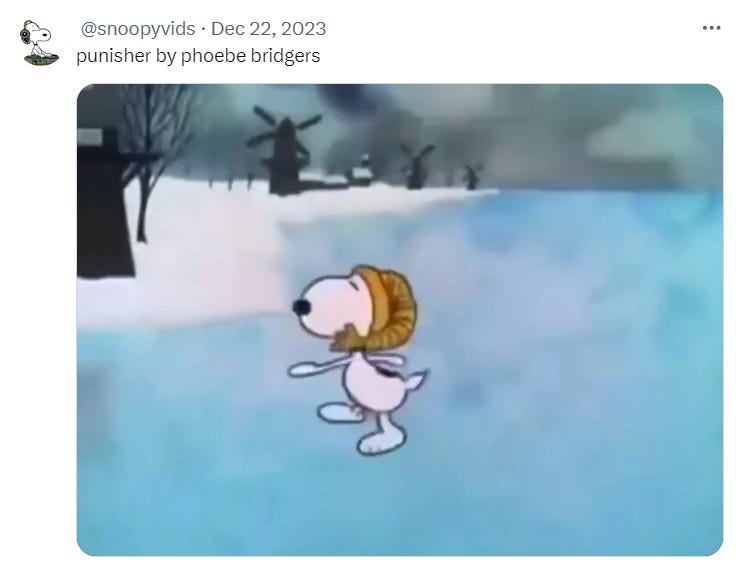
The cuteness of both Snoopy and Miffy has allowed a new audience to find a semblance of comfort on social media platforms, ironically the same place where people are finding shelter. The topic of collectibles can also be applied to makeup products, which brings up the issue of overconsumption.
This tweet spurred a lot of controversy recently as it is an example of the modern-day beauty standards that are linked to viral products that are deemed as ‘must-haves’ by strangers on the Internet. Also, in the context of trinket collecting, beauty products are now likened to things that can be carried around in the hopes that others will see them too.
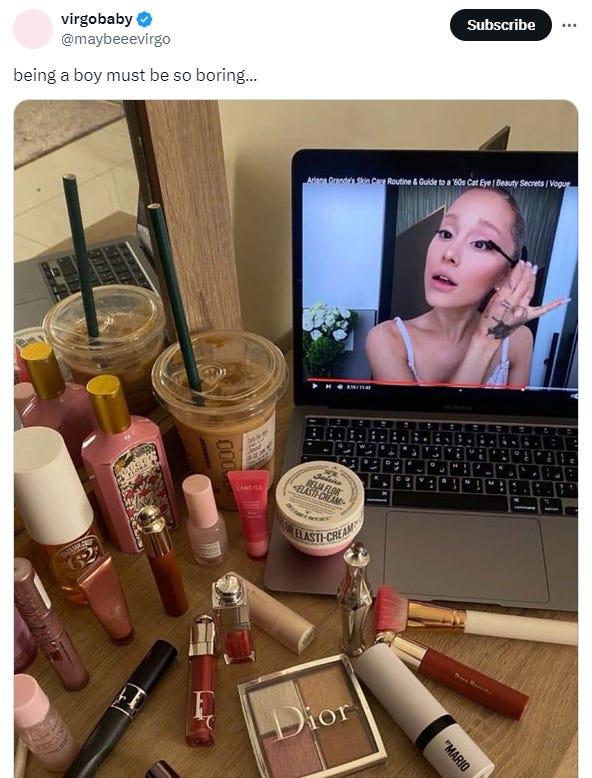
The over-marketing of beauty products makes them inescapable, making consumers (primarily women) indulge in the fantasy of unnecessarily named ‘aesthetics.’ A prominent example of this is the ‘clean girl aesthetic.’ The supposed and implied minimalism that comes with this aesthetic goes against the life-changing narrative that influencers use regarding seemingly every new product launch. The trend cycle returns to the early 2010s culture on YouTube specifically with makeup collection videos garnering millions of views.
The centering of women and ‘girlhood’ on TikTok can be condescending, especially about the ‘girl math.’ What began as a silly term to explain the financial decisions women make led to the oversimplification of complex topics that were insensitive and unnecessary. TikToker @/nikitadumptruck is an example that comes to mind as she began her ‘girlsplain’ (combination of the words ‘girl’ and ‘explain) videos to educate the masses on topics such as the stock market and catcalling. However, the insensitivity she brought to explaining the situation in Palestine in a video posted in October 2023 led to her deleting the video and posting an apology within the next few weeks. This incident reveals a dark underbelly with short-form content, especially on TikTok. By centering the word ‘girl’, it implies that women are unable to do their own research and understand complex topics without likening it to gossip and birthday party politics. Though she explains in a BuzzFeed interview that her explainer-style videos are a way to lessen the intimidation created by the Internet to learn something new, the incident shows that sometimes, it can go too far.
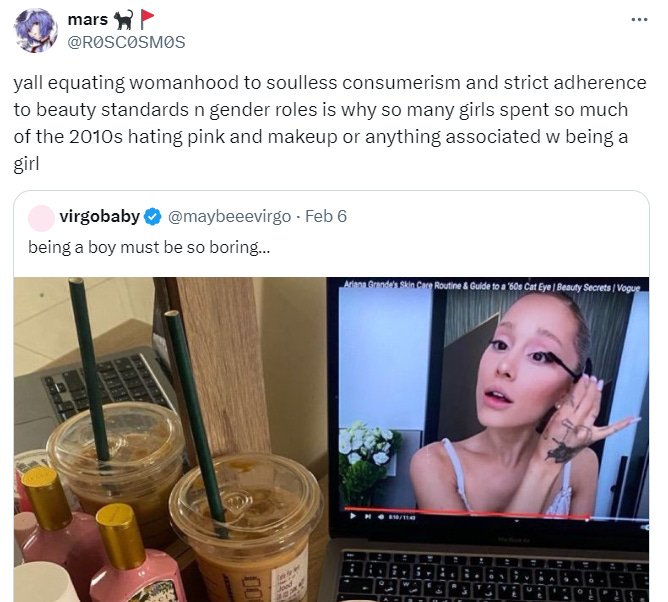
Circling back, the language used in that tweet relates to the timely discussions being held on what is the ‘female experience’ of today’s day and age. The image provides implications that only by owning viral beauty products will you relate to the allusive ‘female experience.’ By doing so, it reaffirms gender stereotypes. As the tweet below suggests, rather than encouraging women to embrace their femininity, we are encouraging women to believe that femininity is bought and not found. It is counter-intuitive and shows why women of earlier decades felt the need to shy away from traditionally feminine ideas such as the color pink.
Trinkets and collectibles can be a fun way to create a sense of community and express one’s interests. However, it can veer on the side of overconsumption when people are manipulated into buying the same product (sometimes multiples of it) to gain a sense of self.